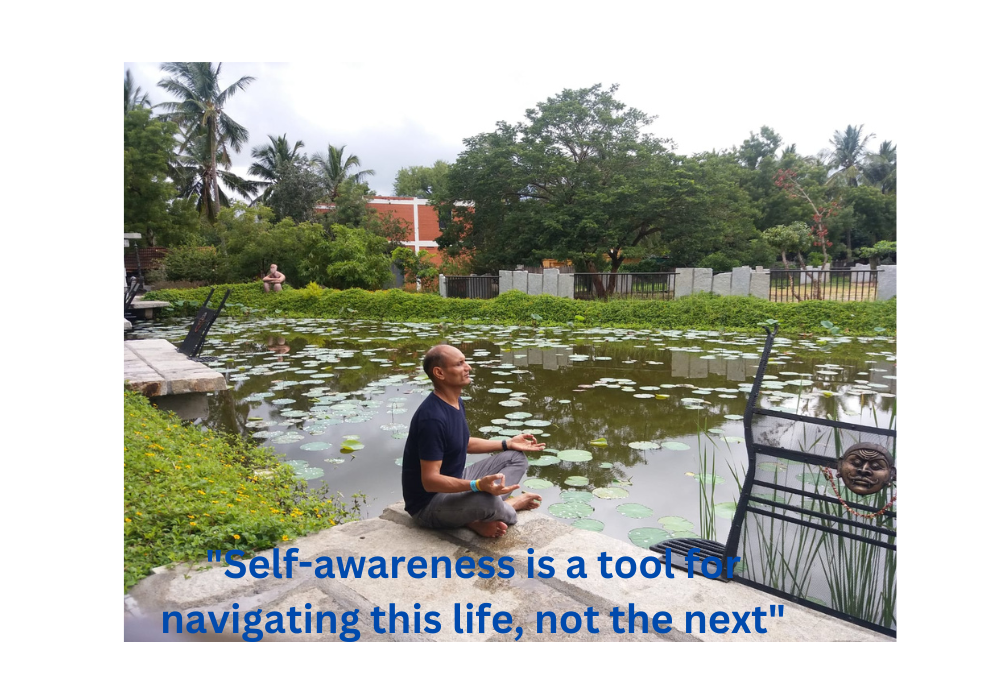

Self-Awareness: The Cornerstone of Leadership
While analysing leadership traits, I discovered that self-awareness stands out as the foundation of an authentic leader. It transcends the realm of mere leadership qualities, forming the basis for personal growth and fulfilment. Self-awareness empowers individuals to understand their core purpose, the values they hold dear, their inherent strengths, and the limitations that shape them. This introspective understanding fosters a deeper connection with oneself, ultimately leading to more meaningful and effective interactions with others.

Imagine a young army officer leading his platoon in a counter-terrorist operation in the Kashmir Valley or the North East. In this intense situation, self-awareness is key. The officer needs to recognize his own strengths – maybe sharp tactical thinking, strong mental focus, or quick decision-making. But he also needs to be aware of his weaknesses -tendency to be overly impetuous or being hasty. This self-knowledge is critical for making sound choices, also factoring in, the actual skill level and abilities of his team. By acting authentically, he can build trust and teamwork – both essential for a successful mission.
In essence, self-awareness isn’t just about knowing oneself; it’s about harnessing that knowledge to navigate complex situations, build genuine connections, and ultimately, lead with authenticity and purpose.
The “Samskara”: A Complex Influence
Deep within lies a complex psychological makeup known as the “samskara” or “basic nature,” shaped by past experiences (karma), cultural background, family, genetics, education, and environment. Changing this deeply ingrained nature can be challenging, much like a lion’s natural hunting instinct persists despite being in a zoo. Notably, the ” basic nature” can influence decision-making, especially in critical moments.
Throughout history, political, military, and corporate leaders have made choices based on intuition, even when facts were available. While these decisions can sometimes lead to unexpected successes, they often result in unforeseen setbacks too. One such example is the invasion of Russia by Napoleon in 1812. Despite warnings about the harsh Russian winter and the vastness of the territory, Napoleon’s clouded “self-awareness” formed based on past military victories and his own strategic brilliance might have influenced him to underestimate the challenges of the campaign. This ultimately led to a disastrous retreat and massive losses for the French army.
Aligning Your Leadership Style with Self
Many individuals, lacking self-awareness, pursue unsuitable careers or leadership styles conflicting with their “basic nature.” While admiring Elon Musk’s visionary, communicative, and motivating “transformational” leadership style, you, as an introvert, might struggle to embody the same. It’s crucial to understand your personality, strengths, weaknesses, core values, and boundaries. This self-awareness allows you to adopt a leadership style that aligns with your true character.
Unveiling Your Inner Self
Ancient Indian texts the “Shrutis” are considered the supreme form of knowledge because these are acquired by “listening” to the divine through the “Atman” (inner self). While seemingly complex, this process is a simple practice involving self-contemplation or introspection. Many already engage in this process to become better individuals.
Dedicate half an hour daily for a week to self-reflection. Note down five things you liked and disliked about yourself and others throughout the day. This repetition will highlight 20-25 recurring behavioural traits, often resulting in 5-10 that consistently bring you happiness or frustration. These emotions, translated into qualities, reveal your core personality. Remember, this honest and solitary journey allows you to truly connect with your inner self. You can seek the objective perspective of a trusted confidante if desired.
Embracing the Findings
Genuine introspection, the act of truly “listening” to yourself, can be a humbling experience. Often, it reveals more imperfections and insecurities than it does positive attributes. I have seen many leaders who discover limitations in inspiring their teams. While they excel at technical aspects of their work but struggle to deliver a motivating vision. Or, like me, they might recognize a lack of emotional intelligence, making it difficult to connect with stakeholders on a deeper level. Additionally, they may identify challenges with focus or a drive that plateaus quickly.
Embracing these imperfections, however, is not a sign of weakness; it’s the first step toward significant growth. It empowers leaders to take action, either by addressing their shortcomings directly or by learning to lead effectively within their limitations. They might seek out training programs to develop their emotional intelligence or delegate tasks that require sustained focus to team members with complementary strengths.
This self-awareness fosters a culture of authenticity within the organization. When leaders acknowledge their limitations, it grants permission for others to do the same. This vulnerability strengthens relationships, fosters trust, and ultimately leads to a more cohesive and high-performing team.









3 comments
Very well articulated sir.
Excellent and very pertinent aspects Sir. Holds good in all walks of life incl civvy street also.
Once again Sir…. Beautifully articulated one. It’s going to be so educative to the readers from all walks of life. Great . Waiting for part 3