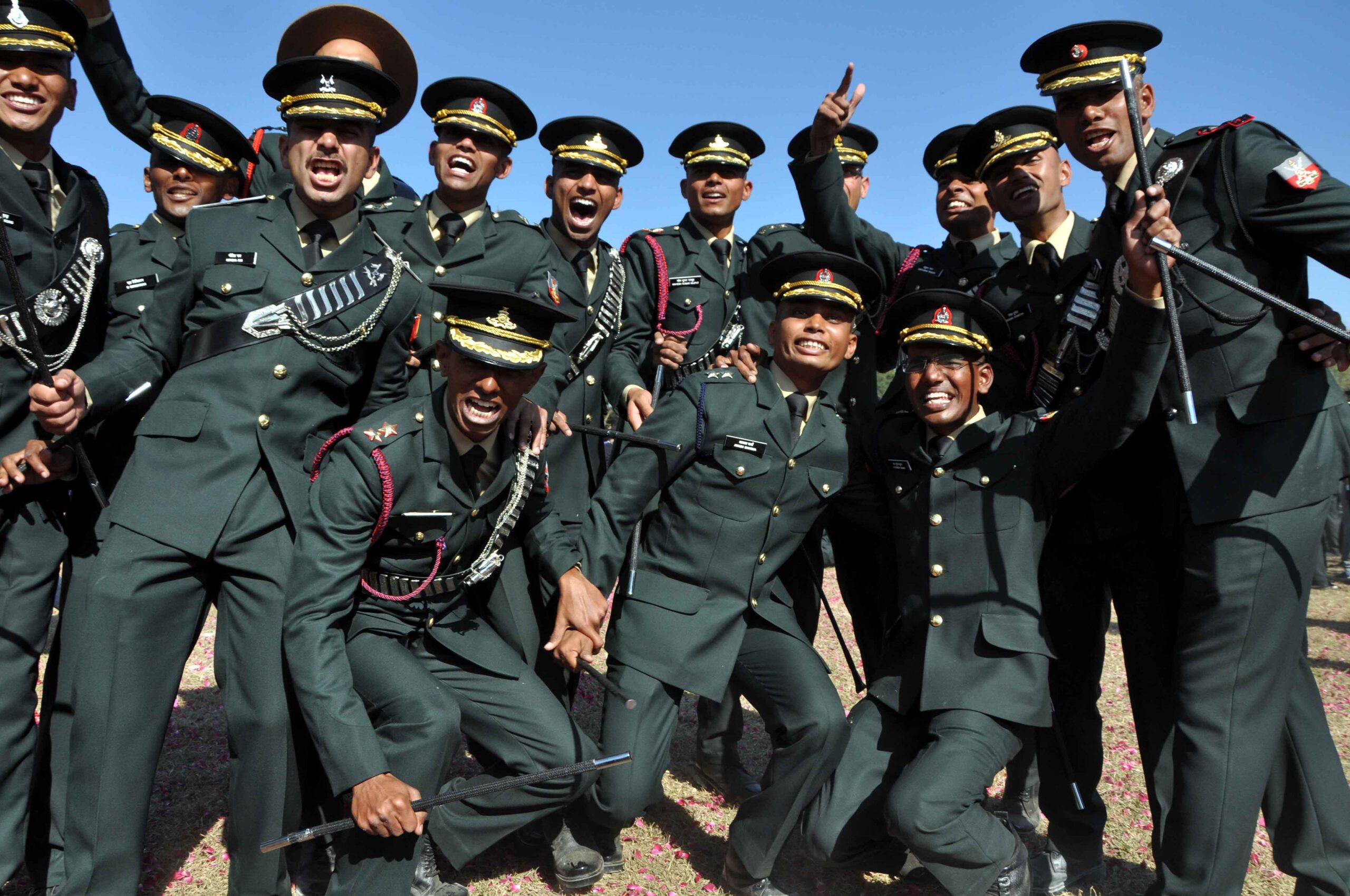

The entry process for the National Defence Academy (NDA) is exceptionally arduous. Twice a year, roughly 6 lakh aspirants vie for approximately 400 openings, resulting in an astonishingly low selection rate. This makes securing a place within the NDA as challenging as succeeding in the highly esteemed civil service examination.
Instilled with a deep sense of duty and honour, the cadets of NDA and other institutions like the Officers Training Academy and the Indian Military Academy are constantly reminded of the privilege and responsibility of being in the finest defence forces of the world. The “Hut of Remembrance,” a daily touchstone, serves as a solemn reminder of their willingness for “ultimate sacrifice”. Furthermore, assurances of respect, dignity, and pride solidify their commitment to serving the nation, confident that their government will support their well-being and needs.
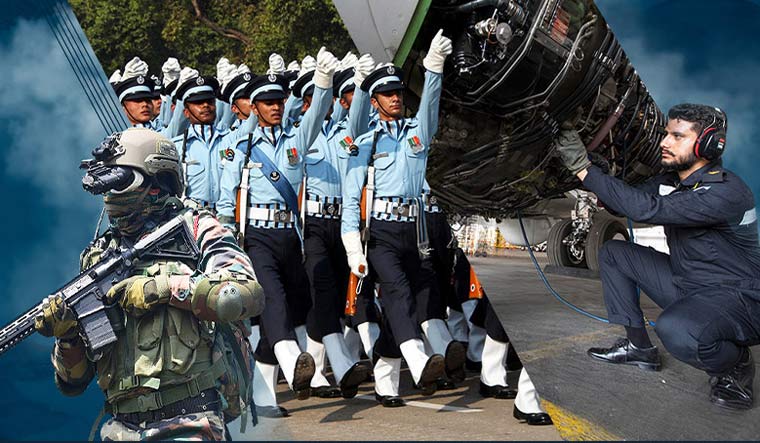
Upon joining their units, these young officers become the backbone of small fighting units – the tank troops, infantry platoons, and special forces teams. Their courage, sacrifice, and leadership qualities have been evident in historic battles like the Kargil War and insurgency operations. While the Indian Army undoubtedly owes its success to its operations led by the junior officers, it’s crucial to acknowledge that this model places a significant burden on them and necessitates their deployment in large numbers.
Early in their careers, many of these motivated officers face a harsh reality check. The actual life in the units may not reflect the future envisioned during training. A significant challenge arises around the 14th year of service, when over half of these officers do not get empanelled for promotion to colonel. This hurdle is particularly stark when compared to their civil service counterparts, who automatically reach the major general equivalent rank of joint secretary by this stage. It’s important to note that the Indian Army, with a force of 45,000 officers, has a limited number of senior positions: only 300 major generals and 80 lieutenant generals. This limited promotional pathway contributes to a very challenging and competitive landscape faced by the mid-ranking officers.

Many officers who enter the Amy with fervent ambition thus find themselves undertaking nondescript assignments after their early supersession, sometimes even working under their former juniors. This extended period of potential career plateau, lasting up to two decades for some, can breed significant frustration. Additionally, the surprise exclusion of those who retire prematurely from the ‘One Rank One Pension’ scheme further restricts their transition to civilian careers, limiting their professional options.
Initiatives like the Ajay Vikram Singh Committee Report, implemented two decades back, while attempting to address these concerns, have not had a significant impact. This is primarily because the measures implemented were largely internal and lacked a “whole-of-government” approach. It is visible that because of these reasons the allure of a career in the defence forces has diminished. While there is no shortage of aspirants applying, the numbers who meet the stringent criteria of the service selection boards (SSB) are decreasing. As a consequence, the fighting units face acute shortage of junior officers whereas large number of non-empanelled officers are available with limited avenues of gainful employment.
The crux of the problem is that the Amy requires larger number of officers in the junior ranks however unlike the bureaucracy cannot promote them all to senior positions at the cost of efficiency. The existing number of higher ranks is already optimized for organizational needs. It thus emerges that the number of “regular cadre” or the “career officers” in the Army have to be reduced so that their promotion prospects improve. This reduction can be achieved by supplementing the regular cadre with a larger support cadre in the junior ranks, which already exists through short service commissions and various soldier entry schemes.
However, the current support cadre is under-utilized due to two main reasons. Firstly, the short service commission lacks sufficient incentives, primarily because the government doesn’t offer any support for transitioning to a second career after service. This is also a concern for the ambitious Agnipath Scheme which will churn out sizeable number of released Agniveers looking for a post release opportunity. Secondly, soldier entry schemes face challenges as junior commissioned officers (JCOs) and other ranks struggle to meet the demanding SSB standards.
The Indian Army, must take following steps to improve the situation:
- Reduce dependence on regular officers for leading small team operations. Empower the JCOs, who are already mandated for this role, if need be, by recruiting a certain percentage of direct-entry JCOs. This will however require a shift in the officer mindset to accept JCOs as frontline junior commanders.
- Consider exempting the candidates of soldier entry schemes (excluding the flagship Army Cadet College) from the SSB, to increase their availability as officers. This exception is not likely to impact the quality or character of the Army as these officers will primarily be holding administrative positions up to the rank of colonel.
- Gradually decrease the intake of “regular cadre” or the “career officers” to approximately half the current number, while simultaneously increasing the number of short service officers.
- Provide meaningful specialization opportunities and continued utilization without bias for non-empanelled officers.
The government also needs to address the issue with sincerity:
- Enhance the appeal of short service commission by offering more attractive terms and conditions, including improved severance packages and support for post-service careers.
- Extend the existing system of periodic cadre reviews and non-functional upgradations, currently enjoyed by civil services, to the defence forces, while balancing the individual aspirations with organizational needs.
- Formalize a process for deputing defence officers to central and state government ministries, PSUs, and public institutions. This formalization can help alleviate the stagnation issue within the defence forces.
These combined efforts from both the service headquarters and the government can potentially address the challenges faced by officers in the defence forces, ensuring a more fulfilling and sustainable career path.


2 comments
Great
The article analyzing the career prospects of Indian Army officers is very well-crafted. You have carried out a comprehensive and insightful examination of the various factors influencing career progression within the Army, which is applicable to the other sister services too.By meticulously deliberating on all pertinent aspects, the article has not only highlighted the challenges faced by officers but also proposed practical and effective solutions. Nice!
Ages ago, I recall reading about the 2/3 and 1/3 dichotomy that exists in the Armed Forces. While management theories advocate 1/3 period in lower management level and balance 2/3 in middle and top management, in the Armed Forces it is the opposite ; leading to a whole lot of challenges!